
Nexus Onion: The Cyberpunk Marketplace Portal
Welcome to Nexus Onion, the next-generation darknet marketplace gateway. Immerse yourself in a digital art gallery aesthetic where security, privacy, and innovation converge. Explore verified Nexus Shop links, advanced OPSEC guides, and a curated selection of cybernetic crow artworks — all within a luminous, high-tech interface.
Verified Nexus Market Links
-
nexuswqi4gl7xlatjgb5ka2jwtet6hatr22ebcqsz4bnshry2zjhxaqd.onion Main -
nexussfpjxn6vgzxsbrktmfgatgygatm3myjle2mxdjpwqzkssf3i7id.onion Mirror -
nexus673tbk5bdvn52sc4z3zfnksntcrrqtyuqusgaclbwsrywrj6bqd.onion Backup
Official PGP Key
-----BEGIN PGP PUBLIC KEY BLOCK-----
Version: OpenPGP.js v4.10.10
Comment: Nexus Market Official PGP

mQENBF+... (PGP KEY DATA) ...w==
=abcd
-----END PGP PUBLIC KEY BLOCK-----
Verify on Nexus Link
Market Statistics

Latest Nexus Market News
Nexus Market 2.0 Launch
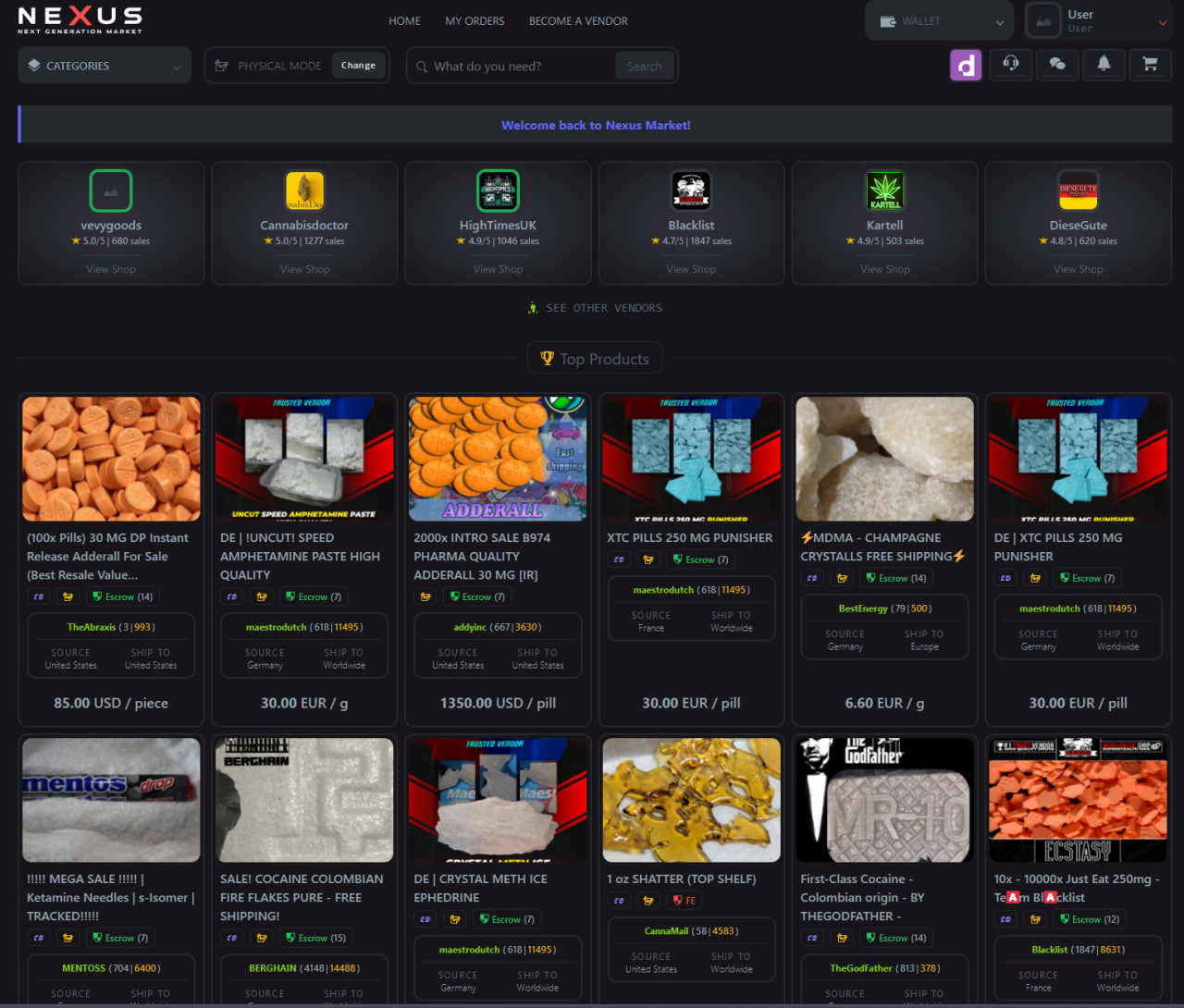
We are excited to announce the launch of Nexus Market 2.0, featuring a redesigned interface, enhanced escrow, and new digital art gallery modules. The update brings a more immersive experience for all Nexus Shop users, with improved navigation and security.
- Faster order processing and vendor onboarding
- Expanded support for privacy coins
- Exclusive cyber crow NFT drops for Nexus Link members

Security Notice: Stay Vigilant
A recent phishing campaign has targeted darknet users. Always verify Nexus Onion links via our official PGP key and avoid clicking suspicious URLs. For maximum safety, use Tor Browser and hardware wallets for all transactions.
- Check PGP signatures before trusting any Nexus Shop link
- Never share your credentials or private keys
- Report suspicious activity to our support team
New Cyber Crow Art Drop
Our latest collection of cyber crow digital art is now live! Collectors can access exclusive pieces through Nexus Link, each featuring unique neon and holographic effects. These limited-edition artworks celebrate the fusion of mythology and technology.
- 4 new crow artworks by leading digital artists
- Claimable via Nexus Shop dashboard
- Special rewards for early collectors
Community AMA & Feedback
Join our upcoming AMA session to connect with the Nexus Market team, share your feedback, and help shape the future of the platform. We value the input of every Nexus Link member and are committed to continuous improvement.
- Live Q&A with admins and developers
- Feature requests and roadmap discussion
- Exclusive giveaways for participants
Why Choose Nexus Market?
Nexus Market is engineered for the future of secure, anonymous commerce. With a focus on privacy, reliability, and user empowerment, Nexus Shop delivers a seamless experience for both buyers and vendors. Our platform is built on advanced cryptography, robust escrow, and a vibrant digital art gallery interface that sets a new standard for darknet marketplaces.
-

Cutting-Edge Security
End-to-end encryption, multi-sig escrow, and PGP messaging ensure your privacy and safety at every step.
-
Instant Transactions
Experience rapid order processing and low-latency support, powered by a scalable, resilient backend.
-

Digital Art Gallery
Browse a curated collection of cyberpunk crow artworks, exclusive to Nexus Link users and collectors.
-

Trusted Community
Verified vendors, transparent feedback, and a dedicated support team make Nexus Market a leader in trust and reliability.


OPSEC: Your Shield in the Digital Underworld
Why is OPSEC Essential?
Operational Security (OPSEC) is the foundation of safe darknet activity. Without strict OPSEC, even the most advanced platforms like Nexus Onion cannot fully protect you. Adversaries exploit carelessness, metadata, and behavioral patterns — making vigilance your best defense.
How to Remain Anonymous
- Always use Tor Browser or Tails OS for all darknet access.
- Never reveal personal information, even in encrypted messages.
- Utilize strong, unique passwords and enable 2FA where possible.
- Use PGP for all communications and verify keys before use.
- Separate darknet and clearnet identities completely.
Essential OPSEC Tools
- Tor Browser / Tails OS: For anonymous browsing and system-level privacy.
- PGP Software: Encrypt and sign messages (GnuPG, Kleopatra, OpenKeychain).
- Hardware Wallets: Store crypto securely offline (Ledger, Trezor).
- VPN (with caution): Only as an extra layer, never as a replacement for Tor.
- Secure Password Managers: Generate and store strong credentials.
Red Flags & What to Avoid
- Phishing links or fake Nexus Shop URLs — always verify via PGP.
- Requests for personal data or off-platform communication.
- Reusing passwords or crypto addresses across platforms.
- Accessing darknet sites from your real IP or mobile device.
- Ignoring software updates or using outdated security tools.
Practicing robust OPSEC is not optional — it's your lifeline in the digital underground. Nexus Market provides the tools, but your discipline is the ultimate safeguard.

Crypto & Privacy: The Nexus Market Standard
A Brief History of Crypto on Darknet Markets
Since the early days of Silk Road, cryptocurrencies have powered anonymous commerce. Bitcoin (BTC) was the original standard, but as blockchain analysis advanced, privacy coins like Monero (XMR) and Litecoin (LTC) emerged as the preferred options for true anonymity.
What Are Privacy Coins?
Privacy coins are cryptocurrencies designed to obscure transaction details, sender/receiver identities, and wallet balances. Monero (XMR) leads the field with ring signatures and stealth addresses, making it nearly impossible to trace transactions — a critical feature for Nexus Onion users.
Accepted Coins on Nexus Market
-
 Monero (XMR)
-
 Litecoin (LTC)
-
 Bitcoin (BTC)
Why Choose Monero (XMR)?
- Unmatched privacy: transactions are untraceable and unlinkable.
- Low fees and fast confirmations.
- Widely supported by privacy-focused wallets and hardware devices.
- Preferred by Nexus Shop for its robust anonymity features.
For the highest level of security and privacy, always use Monero (XMR) when transacting on Nexus Market. Your digital footprint is your responsibility — choose wisely.